
Devastating — that’s the key word often used to describe wildfires. “More than 73,000 wildfires burn an average of about 7 million acres of private, state, and federal land in the U.S. each year,” reports the US Forest Service. The devastation of wildfires hits home here in Washington State, and especially on the east side. Homes are burned. Buildings are destroyed. Hundreds of thousands of acres of land are burned. Tragically, and above all, lives are sometimes lost. In our FPIW Policy Issues booklet, we affirm: “Environmental stewardship should be viewed as a moral duty rooted in love for neighbor — and future generations who will inherit the earth.” We can do more and improve land management, and there are practical actions we can take as we seek to steward the land and love our neighbors.
Three Categories
The National Interagency First Center states: “Every year, on average, human-caused wildfires account for approximately 85% of wildfires in the United States.” There are three main categories of what causes wildfires:
(1) First, there is the category of “accidental fire started by humans,” where a person accidentally starts a wildfire. Such practical measures against accidental fires include starting and extinguishing campfires properly, using outdoor equipment correctly, and burning debris carefully.
(2) Second, there is the category of arsonists — those who intentionally start fires. Over 500,000 fires are set by arsonists each year in the United States, reports the Tri Data Corporation, resulting in over $3 billion in damages.
(3) Third, there is the category of non-human “acts of nature”, such as a lightning strike that causes fires. Fires are often natural, and they can be a way that nature uses to “cleanse itself”.
Beyond these three causations, there is a deeper issue of why wildfires are so massively devastating to communities. Part of the reason, many suggest, is a pre-wildfire land management.
Land Management
Land management includes three key features: grazing, logging, and privatization.
We affirm grazing as a key component of land management. Grazing will reduce wildfires because there will be less grass to burn. It keeps the wildfires at bay. As one rancher from Washington State, Okanogan Commissioner Scott Vejraska, said: “We need to get back to grazing. . . . They won’t let our cattle graze the land, so grass builds up into brush and catches on fire.”
In the previous generation, shared Vejraska, there were 60,000 cattle plus 50,000 sheep that grazed the Okanogan Valley. (Okanogan County is the largest county in Washington State.) Today, however, it’s about 10,000 cattle and no sheep. These land animals naturally remove smaller trees, dead vegetation, and excessive undergrowth that can reduce the amount of available fuel.
Secondly, logging should increase. “There used to be seven lumber mills in our county,” Vejraska shares. “Today we have zero.” That lumber needs to be harvested “like a crop” for human needs. Otherwise, the land is like a matchbox, especially from dead trees. Additionally, restrictions on wood reduce wood products — including housing — skyrocket in price. For historical context, Micky Garus writes:
For much of the 20th century, the forests of the Pacific Northwest were managed as working landscapes. Private timber companies and federal land managers cut, planted, thinned, and tended the land with the understanding that the trees were an asset to be sustained across generations. Clearcuts functioned as firebreaks. Small crews routinely extinguished ignitions before they became news. The result was a regional economy built on living-wage jobs, steady tax revenue for schools and public safety, and forests that, for the most part, stayed green.
Weyerhaeuser and other great companies of wood products should be incentivized to return.
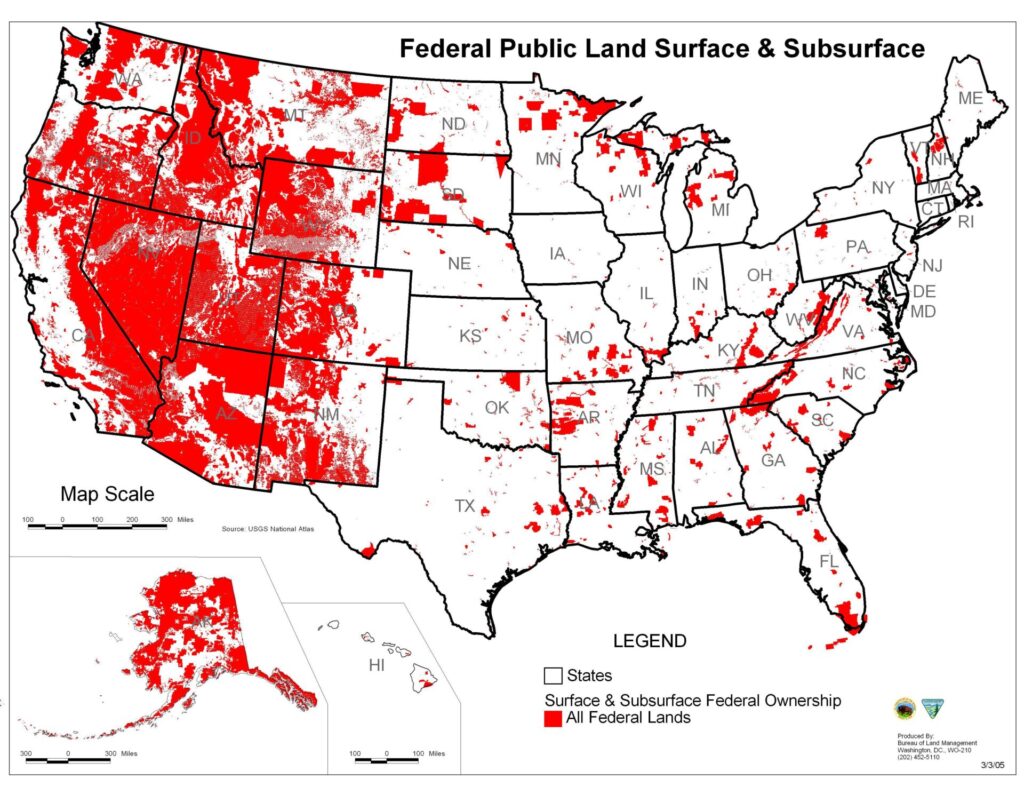
Third, more land should be privatized. Private property often gives people an incentive to care for the land. The largest landowner in the nation is the government. Managing that land is a difficult task, and there are good reasons to be concerned about government’s effectiveness. After the land grab by the federal government, Garus continues:
Federal timber harvests collapsed — often by 80 to 90 percent from 1980s levels in the key regions. Mills closed by the dozens. Supporting businesses disappeared. Unemployment surged. Some communities never fully recovered. Private industrial landowners continued managing their own ground because they still had direct financial skin in the game.
Such a federal land grab results in ranchers and farmers being “choked out”. Fundamentally, a key question is: From where does our food come? It comes from the land and those who cultivate the land and animals, especially farmers and ranchers. With more privatization of the land, will be more farmers and then more food will come and prices will drop.
The recent wildfire in Washington State was reportedly started by an arsonist. If true, we support the full measure of the law. But as we hope the reader can see from the above, the extend of the damage from